


I got into an Uber the other night after shopping at Sam’s Club. I had groceries, and the driver wasn’t particularly helpful. He didn’t get out to help me load them or even open the hatchback.
“Thanks for all your help,” I said sarcastically.
I was irritated, but it didn’t stop there. As we drove away, I started noticing everything he was doing wrong. He was driving five miles over the speed limit. I watched his driving, looking for other things that bothered me. In my head, I’d already decided not to tip him. I wasn’t even going to say goodbye.
All because he hadn’t helped me with my groceries.
The strange thing is, I think I actually felt a little better making those decisions. As though withholding a tip or a goodbye would somehow make things right.
By the time I got home, something had shifted. I gave him a two-dollar tip, rated his driving as great, and acknowledged that his car was clean. He hadn’t suddenly become a different person. I’d simply stopped looking for reasons to dislike him.
And that got me thinking about how often I do this. How often does one small disappointment turn into a case I’m building against another person? How much of my life have I spent doing exactly that?
The Stories We Tell
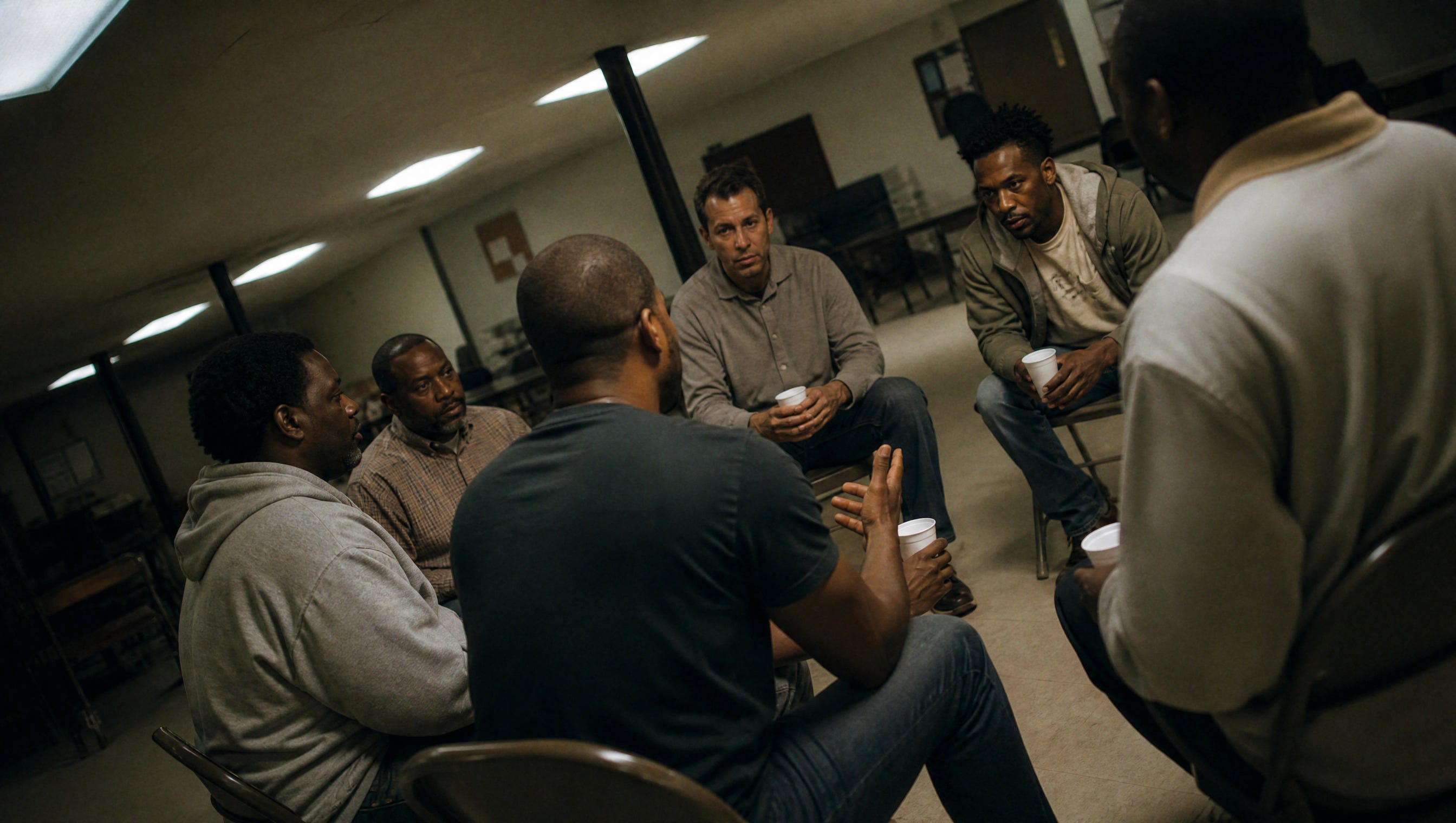
I’ve been going to Alcoholics Anonymous meetings for years, and one thing I’ve noticed is how many stories revolve around people who’ve wronged us. Parents, siblings, spouses, bosses, friends. Someone did something, said something, or didn’t show up when they promised they would.
And we remember.
I’m not criticizing the people who share these experiences. I’ve got plenty of my own. But sometimes I wonder whether we become so attached to our stories that we stop living outside them. We tell the same stories, remember the same injuries, and experience the same anger. Years pass. We move, change jobs, meet new people, and the world around us changes. But inside, we’re still arguing with someone who hurt us twenty years ago.
I know because I do it. I can replay conversations from decades ago, remembering exactly what someone said and how it made me feel. Sometimes I catch myself having arguments with people who aren’t even in the room. I’m trying to win an argument that ended years ago, or perhaps I’m trying to get a different ending. An apology. An acknowledgment. Someone finally admitting that what they did was wrong.
But what if that never happens? How long am I willing to wait?
When Resentment Becomes the Editor

Recently, I had a difficult conversation with someone I was working with on an international medical education project. I felt that commitments had changed without anyone telling me. I felt pushed aside, and it didn’t feel like we were working as a team.
So I said something. We had a direct conversation. I explained what bothered me, and he explained his perspective. There were misunderstandings, apologies, and eventually some constructive decisions about how we’d work together. By the end, I was satisfied with what I’d said.
But afterward, I started replaying the conversation. There was one phrase he used that irritated me, then another. I kept returning to those moments, thinking about what he should have said instead. The conversation had actually gone reasonably well, but I was remembering the parts that hadn’t.
If I remember only the frustrating parts, resentment gets to edit the story.
And I’ve allowed resentment to do a lot of editing in my life.
The Mire

I think of resentment as a mire. You step into it, sometimes without realizing it. At first, it’s just an irritation. Something someone said or didn’t do. Then you start thinking about it, replaying the conversation, imagining what you should have said, rehearsing what you’ll say next time. The more you struggle, the deeper you seem to sink.
The other person may have forgotten the entire incident. Meanwhile, I’m still having the conversation.
I’ve asked myself many times what I’m getting out of this. Maybe holding on to resentment gives me a sense of control. Maybe it allows me to keep the case open, as though I’m refusing to let someone get away with what they did. Maybe letting go feels too much like saying that what happened was okay.
But forgiveness doesn’t mean what happened was okay, and it doesn’t mean I have to trust someone again. It means I don’t have to keep reliving the injury.
That’s easy to say. Living it is another matter.
Cleaning Up My Side of the Street

In AA, the Fourth Step involves taking a searching and fearless moral inventory. It’s where we examine the resentments, fears, and patterns that have followed us through life. The Tenth Step is different. It’s ongoing, about recognizing what’s happening today, taking responsibility for our behavior, and making things right when necessary.
I’ve been thinking about that distinction. Some resentments are decades old, deeply rooted in our personal histories. Others begin in the parking lot at Sam’s Club. And perhaps I don’t have to resolve every old resentment before I can do something about the new ones.
Maybe I can begin by noticing what’s happening. Someone irritates me. I feel disrespected. My mind starts collecting evidence against them. Somewhere in that process, I have a choice. I can keep building the case, or I can stop.
I don’t have to wait until I’m no longer angry to start acting differently.
Because maybe emotional sobriety isn’t about never becoming angry or resentful. Maybe it’s about recognizing resentment sooner and spending less time there. I may not be able to choose my first reaction, but I can choose what I do next.
As I Have Loved You

There’s another part of this that matters to me.
In Leviticus, we’re told to love our neighbor as ourselves. Then Jesus says something different in John 13:34: “Love one another as I have loved you.”
I’ve been thinking about the difference between those two commandments. Loving someone as I love myself is difficult enough. But Jesus points to something beyond my own ability to love. He points to the love he has already shown me.
Years ago, I had an experience during an ayahuasca journey that profoundly changed how I understood God’s grace. I know that experience isn’t something everyone will understand or agree with. I’m not asking anyone to. I’m simply telling you what happened to me.
During that experience, I felt God’s love in a way I never had before. It wasn’t an intellectual understanding or something I’d learned in church or read in a book. It was personal, and it changed me.
For the next four to six months, I saw people differently. Things that would ordinarily have irritated me seemed to roll off my back. I became aware of ways I’d been treating certain people in my life, sometimes using relationships for what I could get out of them. I found myself treating people with a love and patience that hadn’t come naturally to me before.
I wasn’t trying to become a better Christian or following some program for improving my attitude. Something had changed in my heart. I remember telling people about that experience, and sometimes just remembering God’s love would bring me to tears.
For me, that experience became deeply personal evidence of God’s existence. Not an argument I could use to convince someone else, just something I knew I’d experienced.
Then, gradually, that extraordinary awareness faded. The old habits returned. The irritations, the judgments, the resentments. There wasn’t some dramatic moment when everything changed back. Life just went on, and somewhere along the way, I found myself struggling with the same things again.
But I haven’t forgotten what those months were like. I know what it felt like to see people differently, and I know it wasn’t the result of trying harder.
What Do I Do With That?
That’s the question I’m left with.
I know resentment takes an enormous amount of my time and emotional energy. I know replaying old arguments doesn’t change their endings, and holding on to anger doesn’t make another person acknowledge what they’ve done. I also know, from my own experience, that there’s another way to live.
But knowing these things doesn’t automatically change how I feel. I still get irritated, feel disrespected, and find myself building cases against people who probably have no idea they’re on trial.
So maybe I start with something small. Maybe I notice when I’m doing it and ask myself whether I’m remembering the entire story or only the parts that support my resentment. Maybe I remember that the person who irritated me is more than the one thing they did that bothered me.
And maybe I ask myself a question that doesn’t always come naturally: How would Christ have me treat this person?
Not because I need to earn God’s approval or pretend I’m never angry, but because I’ve experienced a love that changed how I saw the world. And I’d like to live more of my life from that place.
I don’t know how to make that happen every day. I’m still figuring it out.

But the other night, I gave an Uber driver two dollars after spending most of the ride finding reasons not to.
It wasn’t some great spiritual victory.
It was two dollars.
And maybe, for now, that’s where I begin.
Love the perspective ❤️